Milwaukee has a lot of old houses. We paint a lot of them.
After fifteen years in this business, the majority of our work happens on homes that were built long before anyone was thinking about vapor barriers or low-VOC formulas — Victorians on the east side, Craftsmans in Bay View, colonials and bungalows tucked into neighborhoods all across the city. We love working on them. They’re built with materials and care that you don’t see much anymore. But they ask more of a painter than a newer home does, and they’re less forgiving when you cut corners.
This isn’t a scare piece, it’s an account of what we think about before we touch a brush on a house that’s been standing for eighty or a hundred years, and what you should be thinking about too, whether you’re hiring someone or picking up the roller yourself.
Lead Paint Removal: We Assume It’s There Until We Know Otherwise
If your home was built before 1978, the conversation starts with lead. That’s not being dramatic, it’s just the reality of Milwaukee’s housing stock. Lead-based paint was standard until it was banned from residential use, and the vast majority of the older homes we work on have it somewhere, often in layers going back decades.
What’s important is whether that lead is intact or disturbed. Paint that’s sound, well-adhered, and not being sanded or scraped isn’t an immediate hazard. In fact, our usual recommendation is to paint over it — a good encapsulating coat locks it in, and that’s the EPA-accepted approach when the surface is stable. It’s the right call more often than people expect.
The situation changes when the paint is peeling, chalking, or needs extensive prep work, especially anything involving sanding. That’s when lead dust becomes a genuine risk, and when containment, proper respirators, and certified work practices aren’t optional. Friction surfaces like windows and doors are another area that needs careful attention, because they wear constantly and can generate fine dust over time. We’ve written about this in more depth in our guide to lead safety for Milwaukee homeowners if you want the full picture.
Our certification: We’re a Certified Lead Company through the Wisconsin Department of Health Services (DHS ID 2767280). In practice, that means containment barriers, HEPA vacuums, wet work methods, and proper disposal on every job where lead is a factor. If you’re hiring a painter for a pre-1978 home, ask whether they’re DHS lead-safe certified. It matters.
For Victorian homes specifically — which often have layers of paint going back a century or more — we always do an assessment before we start. The ornate trim and built-up millwork that make those houses beautiful are also the places where old paint tends to fail first, and where lead dust is most likely to be generated during prep.
Reading The Surface: Prep On An Old House is a Different Animal
New construction is forgiving, and old houses are not. The prep work on an older home is where most professional paint jobs either succeed or start to fail, and it looks different from prepping a new build.
When we walk up to an old house, we’re reading the surface before we think about color or product.
Chalking — that powdery residue that comes off on your hand — tells us the old paint has oxidized and lost its binder, and that new paint won’t bond to it without serious prep.
Alligatoring, where the surface looks like scaled reptile skin, means there are multiple layers that have expanded and contracted at different rates for years.
Peeling is the most obvious sign that something — moisture, adhesion failure, or both — has gone wrong underneath.
Each of these conditions requires a different response, and none of them can be painted over and forgotten.
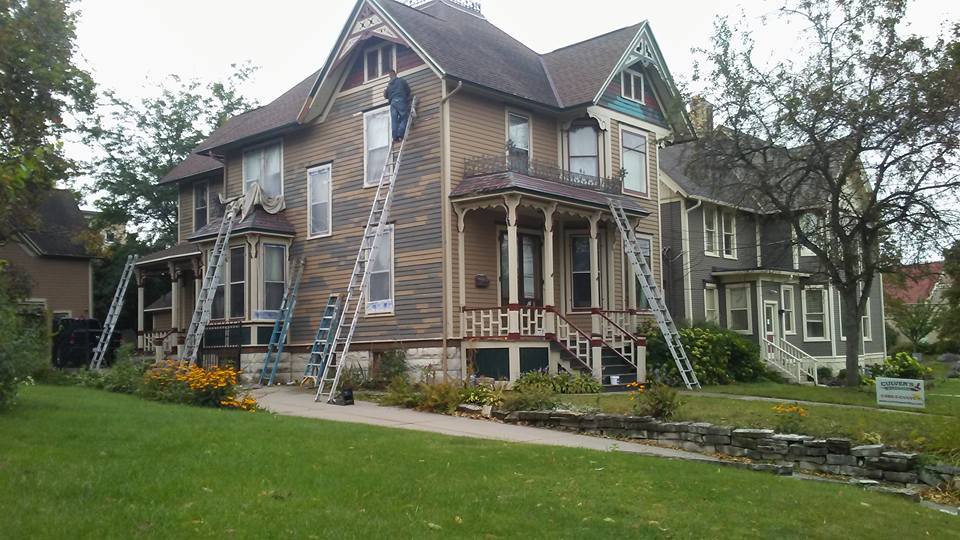
On a Victorian home, the challenge is compounded by the detail work. Carved trim, beautiful moldings, corbels, dentil work require carefully cutting in by hand, with the right brush and enough time. We’ve seen paint jobs on beautiful old Victorians that looked fine from the street and were a disaster up close, because someone tried to rush the millwork. That’s not how we approach it.
For primer on aged wood and problem surfaces, we always reach for oil-based. It bonds better on surfaces that have seen decades of weather, penetrates deeper, and blocks stains that a water-based primer might not. On old houses, it’s frequently the right call.
When sanding is involved — and with old surfaces, it usually is — wet sanding is a good option to keep dust from going airborne, which matters for cleanup and for safety when lead is potentially present. We use HEPA vacuums, not shop vacs.
Moisture and Rot: Paint Can’t Hide What’s Already Broken
This is the mistake we see more than any other on older homes: painting over a moisture problem. It looks fine for a season, sometimes two, and then it doesn’t, because the rot or moisture that was already there kept doing what rot and moisture do.
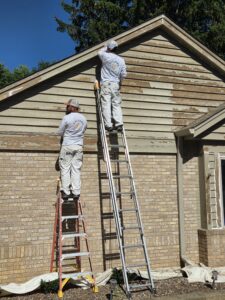
Before we start any exterior job on an old house, we probe the wood. A screwdriver to the trim around windows and doors, to the siding at the bottom courses, to the fascia and soffits — anywhere water tends to collect or freeze. Soft wood is a red flag. Bubbling or dark staining at joints is a red flag. Milwaukee winters are particularly hard on compromised wood: freeze-thaw cycles widen cracks, push moisture deeper, and accelerate decay faster than a milder climate would.
When we find rot, we say so before we start painting. Sometimes it’s a spot repair with epoxy filler and a good prime coat, and sometimes it’s board replacement. Either way, repair comes first (and we do minor carpentry in-house).
Moisture-resistant primers and paints have a real role to play on old houses, but we want to be clear about what they do and don’t do. They slow the ingress of water and buy time for the wood underneath, but they do not fix a drainage problem, a failed caulk joint, or wood that’s already soft. Those problems have to be addressed at the source.
Ventilation and Containment
Interior work in old homes presents ventilation challenges that newer houses don’t. Older HVAC systems, smaller rooms, and less airflow than you’d expect mean that dust, fumes, and lead particulate can concentrate quickly if you’re not paying attention. This applies whether you’re tackling a room yourself or bringing in professional painters for the interior work.
On respirators: the difference between an N95 and a P100 is important here. N95 is adequate for general dust. Lead dust requires a P100 — it’s a higher-filtration rating designed for fine particulate, and it’s what our crews wear on any job where we’re sanding or disturbing old paint. A standard dust mask does not cut it.
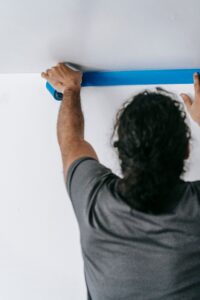
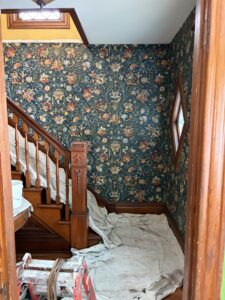
Containment means sealing off the work area properly — plastic sheeting over doorways, HVAC registers covered so dust doesn’t travel through the system, and keeping everything localized to where we’re working. When we finish, cleanup is thorough: HEPA vacuum first, wet wipe-down second, proper disposal of any debris. Lead dust on a floor or shelf doesn’t disappear on its own.
When to Hire a Professional Painting Company and What to Look For
Some of what we’ve described in this post is work that a careful, patient DIYer can handle. Exterior prep on a sound surface, a fresh coat on interior rooms with no lead concerns, straightforward repaints — those are manageable projects with the right materials and time.
But there are situations where we’d really encourage you to bring in someone who knows what they’re doing.
Confirmed lead paint that requires disturbance — sanding, scraping, stripping — is the clearest one. Victorian trim and historical millwork is another; the detail work takes experience and a steady hand, and botched millwork is expensive to undo. Extensive rot that’s worked its way into structural areas, whole-house exteriors on multi-story homes, any job where containment and cleanup need to meet certified standards — these are the places where professional work pays for itself.
When you’re evaluating a contractor, ask specifically about lead-safe certification. Ask whether they’ve worked on Victorian or historical homes before, and whether you can see examples. Ask what their prep process looks like. A contractor who can’t answer those questions in detail is probably not who you want on a house that’s been standing since 1905.
The real cost of a bad paint job on an old house isn’t what you paid for it … it’s what you pay to fix it.
We’ve been working on Milwaukee’s older homes for going on fifteen years as professional painters, and genuinely, they’re some of our favorite jobs. There’s real craft in doing them right — and a house that’s been cared for properly shows it.
Old houses reward patience and honesty. They don’t forgive shortcuts, but they hold up beautifully when the work is done right. That’s been our experience, anyway — job after job, street after street, all across this city.
Working on an older home in Milwaukee? We offer free estimates and are happy to walk through what a project on your home would actually involve. Get in touch.