Key Takeaways
- We rely on oil based primer for most projects because it penetrates wood, handles tannins, and holds up on both interior and exterior surfaces.
- Shellac based primer is a specialty product we use very infrequently, mainly for blocking stubborn stains like smoke damage or water stains.
- For most walls and previously painted surfaces, latex primers are the right call.
What Is Shellac Primer?
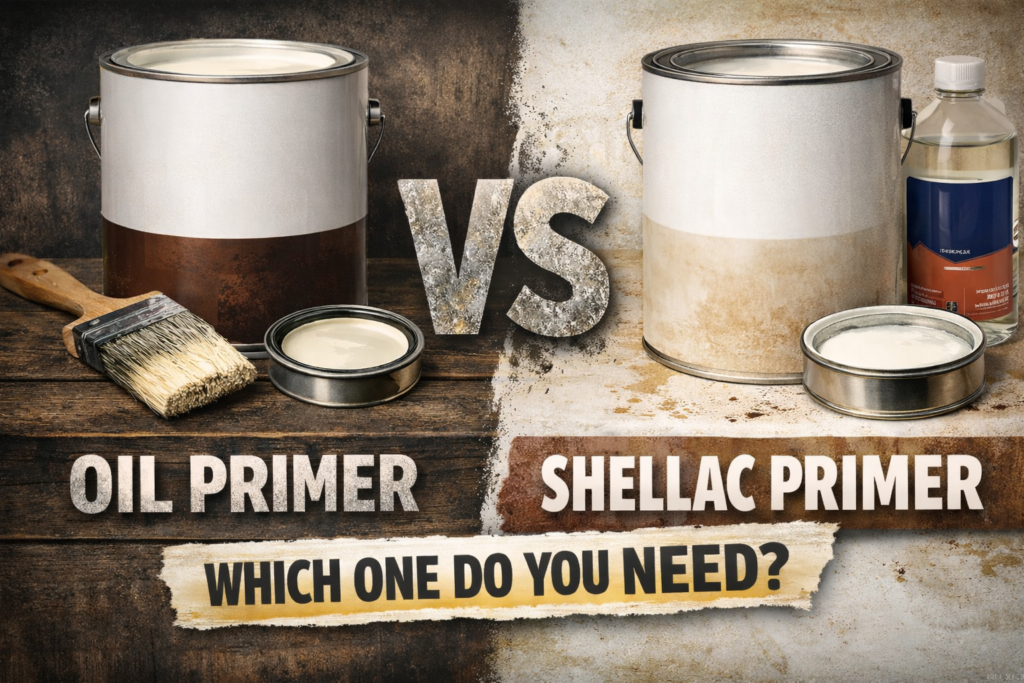
Shellac primer (often called shellac based primer) is made from a natural resin produced by the lac bug and dissolved in alcohol.
That alcohol base is one of its key super skills: it dries fast, often within 45 minutes. It’s also why cleanup requires denatured alcohol instead of water or mineral spirits.
Products like Zinsser BIN (or just BIN as most painters call it) are the most common example of a shellac based primer.
Shellac primer is known for:
- Extremely fast dry time
- Strong stain blocking ability
- Excellent adhesion to slick or glossy surfaces like glass or previously painted trim
It’s powerful stuff, but not something we reach for on most jobs.
What Oil Based Primer Does Better (And Why We Use It More)
Oil based primer is our go-to paint primer for a reason.
It penetrates deeper into wood fibers, which creates a stronger and more durable bond — especially on bare wood and porous surfaces.
That’s ideal for:
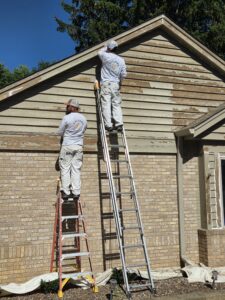
- Exterior wood siding
- Trim made from pine or cedar
- Cabinets and doors
- Painting porous surfaces like raw wood or drywall patches
Oil based primer also does a great job blocking tannins, which is a huge issue with wood like cedar and other stain-prone materials.
It’s thick, it seals well, and it creates a solid base for your topcoat.
Yes, it takes longer to dry and often requires sanding to smooth out brush marks, but the durability and flexibility make it the better choice for most projects.
Where Shellac Based Primer Still Has a Role

Even though we don’t use shellac based primer often, it does have a few situations where it’s a good tool to have in your toolbelt.
Blocking Stubborn Stains
Shellac primer is excellent for blocking stubborn stains that keep bleeding through paint. This includes:
- Heavy stains from water damage
- Smoke damage
- Nicotine stains
- Certain knots in wood
If you’re dealing with serious stain blocking issues, shellac based primer (like BIN) will outperform latex/acrylic primers and sometimes oil based primer.
Sealing Odors
Shellac is also one of the best options for sealing in odors. Because it creates a hard seal on the surface, it can lock in smells from smoke or pets in a way that other primers sometimes can’t.
Adhesion to Difficult Surfaces
Shellac based primers provide excellent adhesion, even on surfaces that are tough to stick to, like glossy surfaces, glass, and previously painted cabinetry.
In scratch tests, shellac based primer often holds up the best, with paint sticking even under heavy pressure.
Why We Don’t Use Shellac Primer Much
Shellac primer has some real downsides.
- It’s brittle and can crack because it doesn’t expand and contract with temperature changes
- Strong fumes (definitely not low odor)
- Very fast dry time can make it hard to work with when spraying or brushing
- Requires denatured alcohol for cleanup
- More expensive than latex primers or oil based primer
For large areas, exterior surfaces, or whole-house projects, it just doesn’t make sense.
Oil vs Latex vs Shellac (Quick Breakdown)
Here’s how we think about each type of primer:
- Oil based primer: best all-around choice for wood, trim, cabinets, and exterior work
- Latex primers: best for bare drywall and painted walls
- Shellac based primer: best for stain blocking, odor sealing, or in very specific problem areas
If you’re painting walls with latex paint, you usually don’t need shellac or even oil primer unless there’s a problem.
Putting the Shellac On The Question Of Shellac Primers
Both shellac and oil primers have their place, but they’re not equals in how often they should be used.
Oil based primer is the workhorse. It handles most surfaces, bonds really well, and gives you a durable base for paint.
Shellac primer is the specialist. When you have heavy stains, odors, or tricky adhesion issues, it can solve the problem.
If you’re trying to figure out the best primer for your project, it usually comes down to one question:
Is there a problem to solve — or just a surface to prep?
If it’s just prep, oil or latex will generally get the job done.
If you’ve got questions and want a professional painter’s opinion in the Milwaukee area, we’d be happy to stop by for a free consultation.