Key Takeaways
- Lead remediation is a broad term that generally includes lead-safe painting, cleaning, stabilization, interim controls, or other steps that reduce lead exposure.
- Lead abatement is more specific and more permanent. It is specialized work meant to eliminate or directly address lead-based paint hazards entirely.
- For many older Milwaukee-area homes, the right answer may be lead-safe painting rather than full abatement, but the only safe move is to understand the condition of the paint before preparation begins.
Homeowners hear terms like lead remediation, lead abatement, lead-safe painting, encapsulation, and RRP work and assume they all mean the same thing … or simply have no idea what any of them mean.
On top of that, one contractor may say they “handle lead paint.” Another may say they perform lead abatement. Another may say they’re lead-safe certified. They’re all different things.
The simplest explanation is this:
Lead remediation usually means reducing or managing lead hazards. Lead abatement is a particular specialized process meant to permanently address lead-based paint hazards.
That difference can be relevant because federal law, state laws, certifications, and cleanup procedures can change depending on the project.
Why Lead Paint Is Such a Big Deal
Lead based paint becomes dangerous when it starts breaking down or gets disturbed.
Peeling paint, cracking trim, sanding, demolition, window friction, and aggressive prep work can spread lead dust and paint chips throughout a home.
Lead exposure carries serious health risks. Lead poisoning has been linked to:
- Brain and nervous system damage
- Behavioral problems in children
- Learning difficulties
- Kidney damage
- Developmental delays
Public health agencies have repeatedly said there is no truly safe level of lead exposure for children. That’s why older-home painting needs careful prep and thoughtful cleanup. The goal is either to avoid disturbing the lead-based paint or to use proper containment, filtration, and cleanup when disturbance is part of the work.
What Is Lead Abatement?
Lead abatement is work specifically performed to eliminate lead-based paint hazards.
The Environmental Protection Agency treats lead abatement differently from ordinary renovation repair and painting work. If the purpose of the project is to address lead hazards themselves, the work may fall into lead abatement.
Lead abatement projects may include:
- Removing lead-based paint
- Replacing old painted components
- Encapsulation
- Enclosure systems
- Specialized cleaning
- Clearance testing
- Lead based paint inspections
- Risk assessments
Lead abatement activities are typically performed by certified professionals with specialized training.
What Is Lead Remediation?
Lead remediation is a broader phrase.
In real-world conversation, remediation services can include lead abatement, but they may also include interim controls, repainting, stabilization, specialized cleaning, repairs, and maintenance meant to minimize lead hazards.
For example, a remediation plan may involve:
- Wet scraping instead of dry sanding
- Stabilizing peeling painted surfaces
- Cleaning lead-contaminated dust
- Covering contaminated soil
- Using lead-safe work practices during painting
- Repainting with lead-free paint systems
Lead remediation is often more budget-friendly than full lead abatement, especially when the lead-based paint is still mostly intact.
Lead Abatement vs. Remediation
This is the clearest way to think about lead abatement vs remediation:
- Lead remediation = reduce or manage lead hazards
- Lead abatement = permanently address or eliminate lead-based paint hazards
Lead remediation may focus on reducing immediate lead exposure.
Lead abatement is more regulated and more permanent.
Lead Abatement vs. RRP Projects
RRP stands for renovation, repair and painting. These are projects where contractors disturb lead-based paint while doing normal remodeling, repair, or painting work.
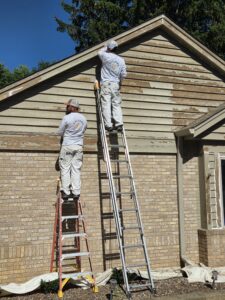
A painter replacing trim, scraping siding, repairing windows, or repainting an older home may disturb lead paint during the project.
That does not automatically mean the job is formal lead abatement.
RRP projects and lead abatement are regulated differently.
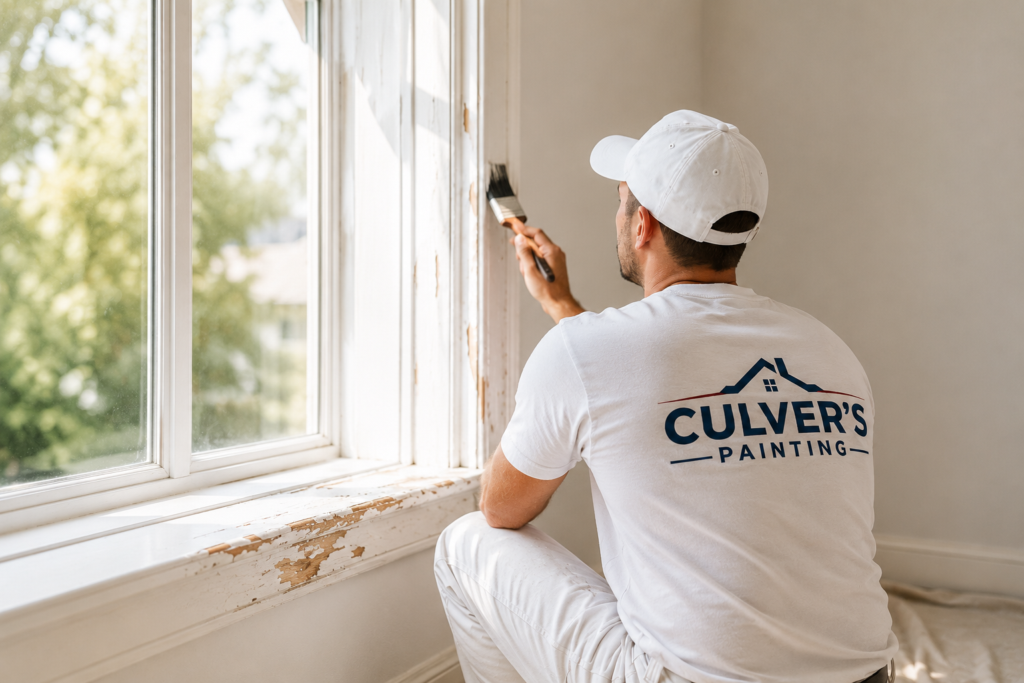
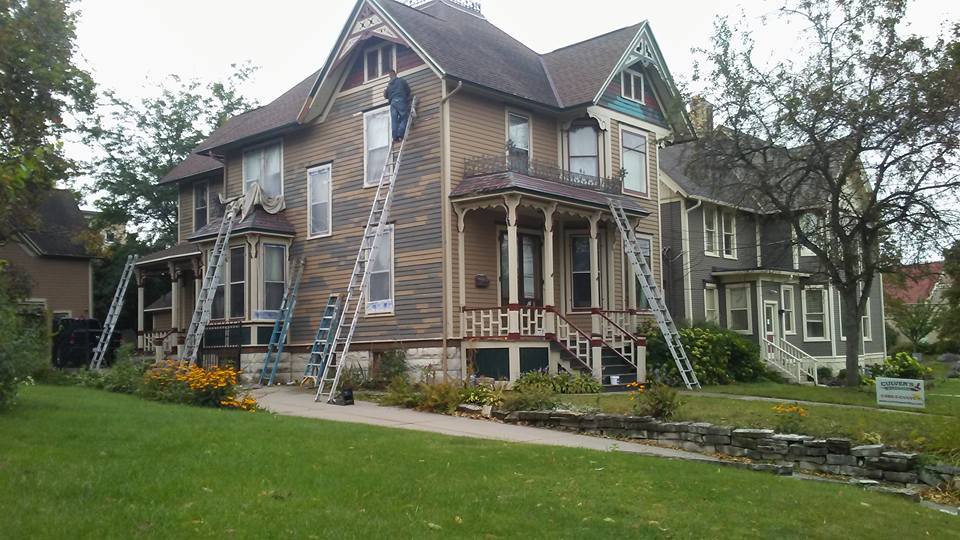
At Culver’s Painting, we perform lead-safe renovation and painting work for older homes. Sometimes that’s the right fit. Sometimes a homeowner may need a lead abatement contractor, additional testing, or more extensive lead hazard removal.
The Four Common Methods of Lead Abatement
1. Lead Paint Removal
This method removes the lead-based paint from the surface.
Lead paint cannot be removed aggressively and without filtration in the space. Burning, open-flame methods, uncontrolled power washing, and machine sanding without a HEPA filter can create new lead hazards very quickly.
2. Enclosure
Enclosure covers the lead-based paint behind another durable material like drywall or paneling.
3. Encapsulation
Encapsulation seals lead-based paint under a specially made coating system. It is not the same as simply painting over failing paint.
4. Replacement
Replacement removes the painted component completely. This is common with old windows, doors, and trim that create friction and lead dust simply through day-to-day use.
What Are Interim Controls?
Interim controls are temporary or ongoing methods used to reduce lead exposure temporarily, including cleaning and repainting. Interim controls do not always eliminate lead-based paint completely, but they can dramatically reduce lead hazards when handled correctly.
When Might You Need Lead Abatement?
You may need lead abatement if:
- Lead based paint hazards are identified during inspections or risk assessments
- A child-occupied facility has deteriorating lead paint
- A rental property has repeated lead dust issues
- A health department or local government requires corrective work
- A federally assisted housing project triggers additional rules
- Paint chips or lead dust are spreading throughout the property
Some state governments and local laws have stricter requirements than others.
When Might Lead-Safe Painting Be Enough?
Not every older home needs full lead abatement. A lot of Milwaukee-area homes simply need careful prep, smart containment, and proper lead-safe work practices during painting and repairs.
That is where repair and painting RRP practices are involved. At Culver’s Painting, we use lead-safe methods for older homes because careless prep can spread lead dust all over a house in a hurry.
How Culver’s Painting Handles Older Homes
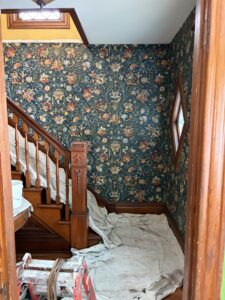
We work on a lot of older Milwaukee-area homes with original woodwork, historic trim, aging siding, and decades of layered paint.
Those homes deserve careful prep.
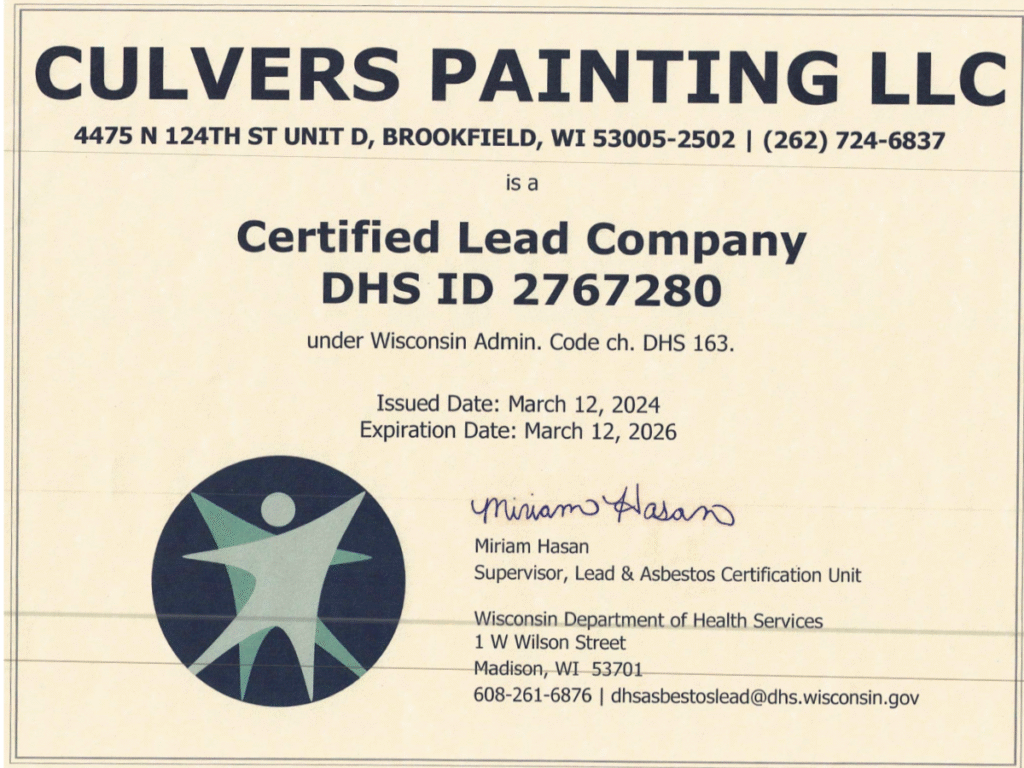
As a Certified Lead Company under Wisconsin DHS 163, we use lead-safe work practices during painting, repairs, and renovation work where lead-based paint may be present.
That includes containment, thoughtful prep, proper cleanup, and safer methods that help minimize lead hazards during the project. If a situation appears to require formal lead abatement, lead hazard evaluation, or more extensive lead-based paint activities, we can point homeowners in the right direction instead of pretending every project is the same.
Looking For Lead-Safe Painters Near You?
If you own an older home and are searching for lead-safe painters near me, start by asking smart questions before the sanding and scraping begin.
Ask how the contractor handles lead dust. Ask whether they follow repair and painting RRP guidelines. Ask what steps they take to protect painted surfaces, floors, windows, landscaping, and nearby living spaces.
A clean-looking paint job doesn’t mean much if the prep work spreads lead hazards through the house.
Talk With Culver’s Painting About Your Older Home
If you’re planning interior painting, exterior painting, trim repairs, or restoration work on a pre-1978 home, we would be glad to talk through the safest path forward.
Culver’s Painting helps Milwaukee-area homeowners repaint older homes carefully, cleanly, and with respect for the health concerns tied to lead-based paint.
Reach out to our team, show us what you are working on, and we will help you figure out whether your project calls for lead-safe painting, remediation, testing, or a lead abatement contractor.
FAQs
What’s the Difference Between Lead Remediation and Abatement?
Lead remediation is the broader category of reducing or managing lead hazards. Lead abatement is a more specialized process meant to permanently eliminate or address lead-based paint hazards.
Does Homeowners Insurance Cover Lead Abatement?
Usually, no. Most homeowners insurance policies do not treat lead abatement as a standard covered repair.
There can be exceptions tied to specific claims, financial assistance programs, or local government requirements, but homeowners should never assume coverage before talking with their insurance company.
Does Dawn Dish Soap Remove Lead Dust?
Dish soap can help with surface cleaning, but homeowners should not rely on Dawn dish soap alone for serious lead dust problems.
Lead contaminated dust often requires HEPA vacuuming, wet wiping, specialized cleaning methods, and in some cases clearance testing.
The bigger problem is usually the source of the dust itself. If old lead-based paint keeps breaking down, the dust keeps coming back.
What Happens If I Inhaled Lead Paint Dust?
One-time exposure does not always lead to immediate illness, but lead exposure is cumulative.
If someone inhales a meaningful amount of lead paint dust, especially during unsafe renovation work, they should contact a medical professional. Lead poisoning can develop slowly over time. Children, pregnant women, and people in close proximity to renovation work face higher risks.