Most of the houses we paint in Milwaukee went up during a particular run of decades, and each decade of builders and owners had their own ideas of what a house should look like in form and color.
When an old house looks a little off from the street, the colors often came from a different decade than the house did. A Queen Anne in one flat beige or a 1920s bungalow in pale gray with bright white trim might never quite settle into its block.
So, how do you pick period-accurate colors for your home in Milwaukee?
Start with when your house was built, find its era and style, then look through colors and schemes that era used and that we’d still put on a house these days. Each one has a Sherwin-Williams name and number you can take to the store.
Key Takeaways
- Victorian houses (1870s to about 1905) wore deep, rich colors with dark window sash.
- Bungalows and Craftsman houses (about 1905 to 1930) used earth tones: browns, greens, and grays with cream trim.
- Your house’s build year is a free lookup on the City of Milwaukee’s property search!
How Do You Find Out When Your House Was Built?
If you’re in the City of Milwaukee, search your address or tax key on the Assessor’s Office Real Property Search. In Wauwatosa, Shorewood, Whitefish Bay, or the Waukesha County communities, your own municipality’s assessor keeps those records, and most offer a similar lookup tool online.
(Plaster walls are one quick clue that a house is older than it looks, and we cover how to spot them in our old-house checklist.)
Which Milwaukee House Era Is Yours?
Most of Milwaukee’s older homes fall into one of five eras. The years overlap, and the style of the house matters even more than the exact date.
| Era | Roughly |
|---|---|
| Italianate and Cream City brick | 1850s to 1880s |
| Victorian and Queen Anne | 1870s to about 1905 |
| Workers’ cottages and Polish flats | 1880s to 1920 |
| Bungalows and Arts and Crafts | about 1905 to 1930 |
| Tudor and Colonial Revival | about 1900 to 1940 |
Sherwin-Williams Historic Color Palettes by Era
Sherwin-Williams publishes several historic color collections, and every color in this guide comes from one of them. For each era:
- Italianate, Victorian, and workers’ cottages: the Victorian Preservation Palette, which lays out body, trim, and accent schemes, and the Victorian group in the Historic Paint Colors collection.
- Bungalows and Arts and Crafts: the Arts & Crafts exterior palette and the Arts & Crafts group in Historic Paint Colors.
- Colonial Revival: the Colonial Revival group in Historic Paint Colors, which Sherwin-Williams dates to the 1870s through 1900s.
- Tudors and other 1920s houses: the Jazz Age group in Historic Paint Colors, described as light backdrop shades with bold accents (Sherwin-Williams).
- Ready-made schemes for Victorian and Craftsman houses: the America’s Heritage palette, eight exterior combinations drawn from historic schemes.
What Colors Suit an Italianate or Cream City Brick House? (1850s to 1880s)
On a brick house of this era, the brick is the body color, and paint goes on the trim, cornices, window frames, and sash. Frame houses of the period were often painted to look like stone, in warm grays, browns, and sandy yellows, usually in two tones, and the brackets were painted the trim color rather than picked out in a third.
Leave Cream City brick unpainted. We’ve written about why it’s usually a mistake to paint it.
Against that pale brick, deep trim colors look great: Sherwin Williams’ Rookwood Dark Brown (SW 2808) or Rookwood Dark Green (SW 2816) are great options.
What Colors Were Victorian and Queen Anne Houses Painted? (1870s to About 1905)
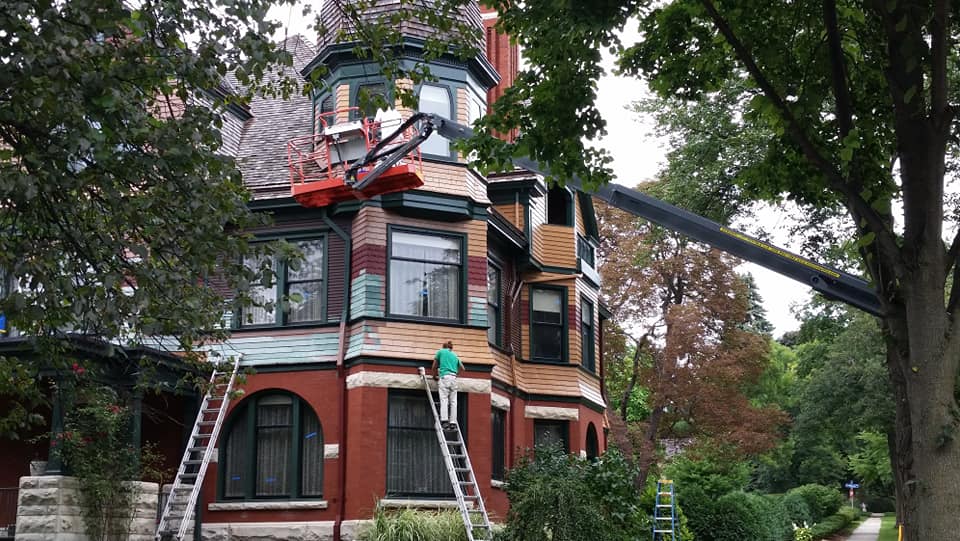
Dark and rich. Body colors including olive, deep red, brown, and straw yellow, with contrasting trim and often three or more colors on one house. Window sashes were painted darker than everything else, sometimes close to black. The sash was often painted darker than the main body color to make the windows appear to fall back or recede into the facade.
The bright pastel “painted lady” schemes are mostly a product of 1970s and ’80s taste.
Two combination ideas from Sherwin-Williams’ Victorian palette that we’d put on a house today:
| Body | Trim | Accent |
|---|---|---|
| Renwick Olive (SW 2815) | Rookwood Dark Brown (SW 2808) | Renwick Golden Oak (SW 2824) |
| Downing Straw (SW 2813) | Rookwood Red (SW 2802) | Rookwood Dark Green (SW 2816) |
What Colors Suit a Workers’ Cottage or Polish Flat? (1880s to 1920)
Many of these started as small cottages with a simple Victorian Gothic or Queen Anne front. Families later jacked the house up and built a second unit underneath, which is how Milwaukee ended up with so many Polish flats. A pared-down version of the Victorian palette suits them: one body color, one trim color, and dark sash.
We’d look at Downing Earth (SW 2820) with Downing Sand (SW 2822) trim, or Renwick Heather (SW 2818) with Downing Slate (SW 2819). If yours has been re-sided in aluminum, it can still be painted.
What Colors Are Period-Correct for a Bungalow or Craftsman House? (About 1905 to 1930)
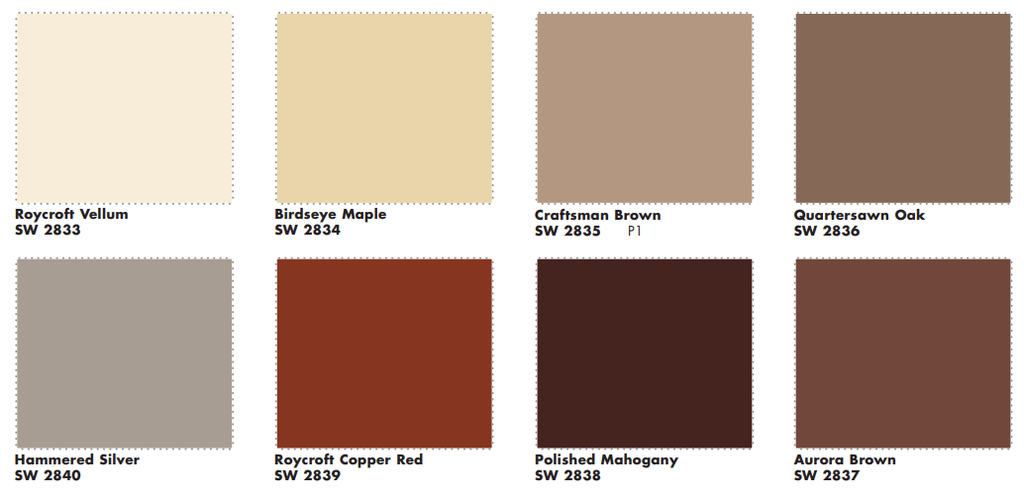
Earth tones. Bungalows and Arts and Crafts houses wore browns, olive and bottle greens, warm grays, and brick reds, with cream or buff trim and dark green sash. Many used two body colors, with clapboard or stucco on the first floor and shingles above.
Washington Heights was largely built in a 1920s boom of Arts and Crafts bungalows and duplexes (Encyclopedia of Milwaukee), and the North 47th Street Bungalow Historic District went up between 1922 and 1928 (Wisconsin Historical Society).
Two combinations from Sherwin-Williams’ Arts and Crafts palette:
| Body | Trim | Accent |
|---|---|---|
| Craftsman Brown (SW 2835) | Roycroft Vellum (SW 2833) | Quartersawn Oak (SW 2836) |
| Bunglehouse Gray (SW 2845) | Roycroft Bottle Green (SW 2847) | Roycroft Copper Red (SW 2839) |
If you want a gray bungalow, Bunglehouse Gray is one we’d point to.
What Colors Suit a Tudor Revival or Colonial Revival House? (About 1900 to 1940)
Tudors pair light stucco in cream, buff, or pale yellow with dark half-timbering and dark trim in brown, black, or deep green. Deep red is traditional on the front door. Our picks might include Roycroft Vellum (SW 2833) on the stucco with Rookwood Dark Brown (SW 2808) on the timbers.
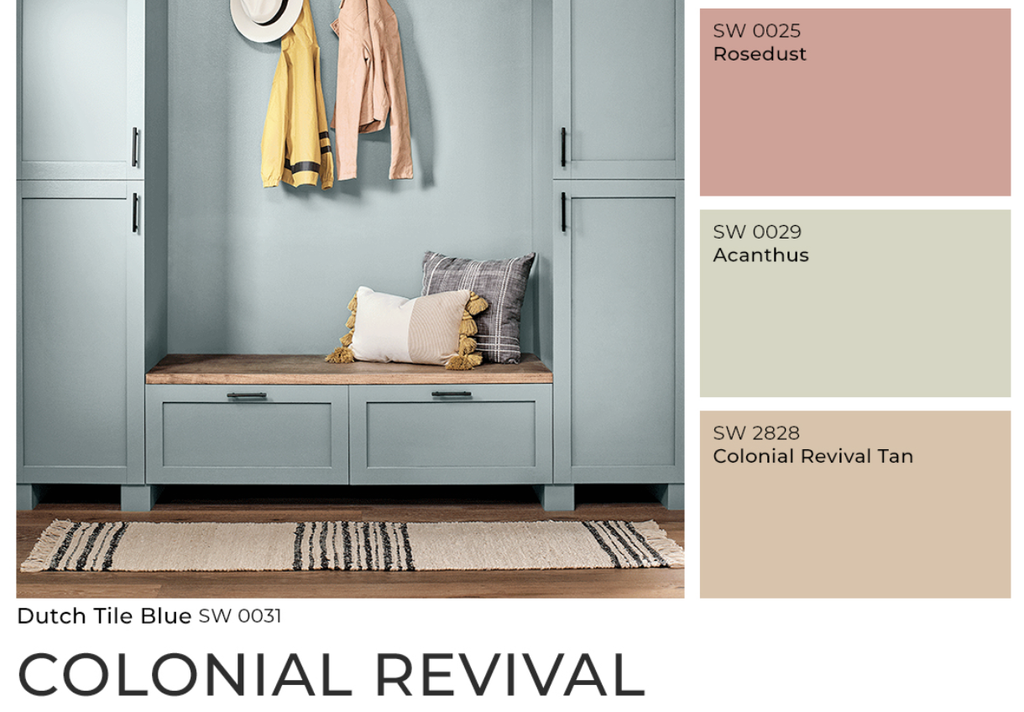
Colonial Revival went lighter, with white and pale yellow bodies and simple trim. Sherwin-Williams lists Classical Yellow (SW 2865) and Colonial Revival Tan (SW 2828) among its Colonial Revival colors, and its Arts and Crafts palette pairs Colonial Revival houses with Classical White (SW 2829) trim.
Which Historic Colors Look Best on a House Today?
The schemes that we see hold up best pair a body color in the middle range, neither pale nor very dark, with darker trim or sash. If you want to know what your house looked like originally, scrape a shallow bevel through the old paint on a protected piece of trim and check out the layers. Our guide to painting a historic Milwaukee home walks through this.
Get Help Choosing Colors for Your Older Milwaukee Home
We paint older homes all over the Milwaukee area, from Cream City brick Italianates to 1920s bungalows. Request a free estimate and we’ll walk the house with you, look at what’s under the old paint, and bring samples from its era’s palette.
Our color consultation is a walkthrough of your house with samples from its era’s palette. Get in touch for a free estimate and we’ll tell you what we’d put on it.
Other Common Questions
What are the best exterior colors for a Craftsman bungalow?
Earth tones. Browns, greens, and warm grays with cream trim, such as Craftsman Brown (SW 2835) with Roycroft Vellum (SW 2833).
What color trim goes with Cream City brick?
Leave the brick unpainted and use deep browns or greens on the trim and sash, like Rookwood Dark Brown (SW 2808).